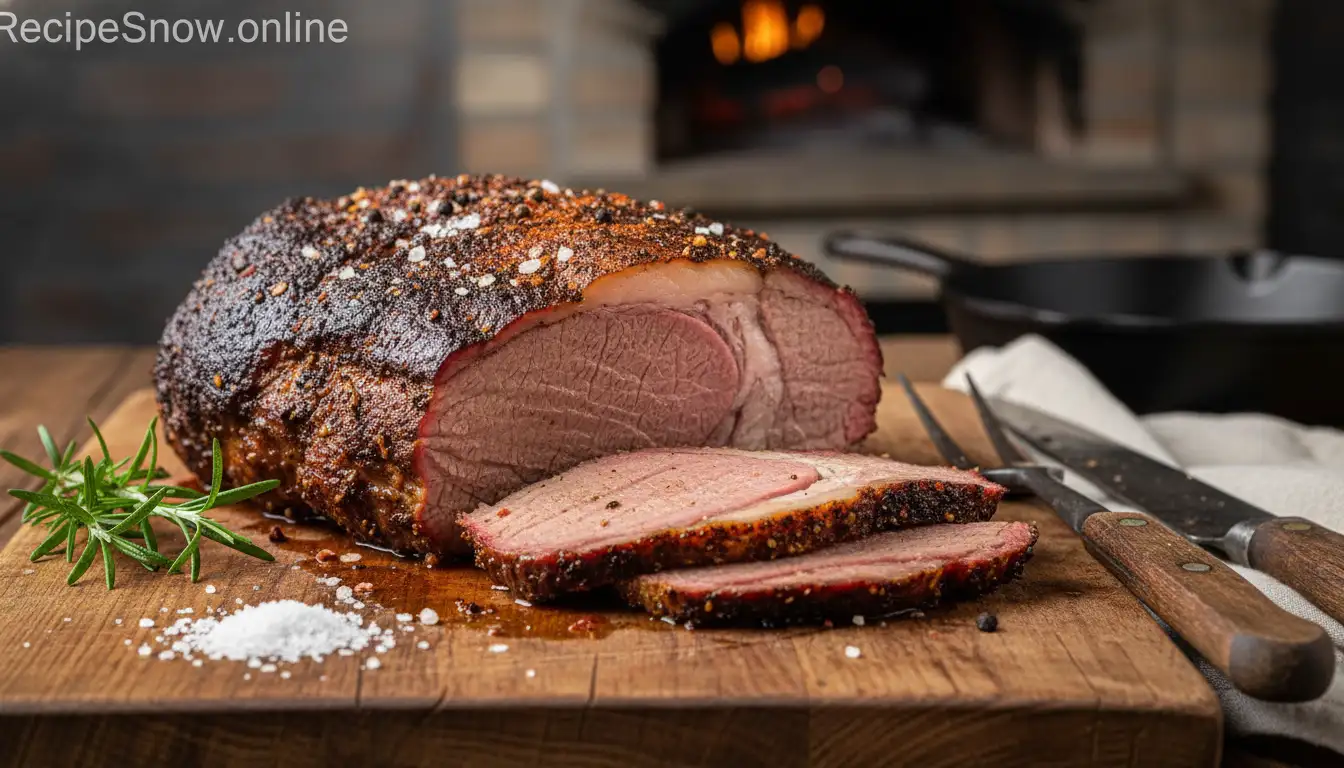
Estimated prep time 30 minutes (plus any optional overnight seasoning)
Cook time 4 to 6 hours depending on size and oven temperature
Total time 4 hours 30 minutes to 6 hours 30 minutes (including resting)
Servings Serves 6 to 10 depending on roast size
Introduction — Oven-Baked Brisket Recipe
The Oven-Baked Brisket Recipe is a straightforward way to transform a humble cut into a showstopping main. Start with a well-trimmed brisket, season confidently, and let low, steady heat work its magic. Patience rewards you with a deeply flavored crust and tender meat that pulls apart in silky strands. This recipe emphasizes clear steps, sensory cues, and simple tricks so you get a reliably tender brisket every time. Read through before you begin, prep your pan and thermometer, and let the oven do the slow work while you plan sides and good company.
Table of Contents
Ingredients for Oven-Baked Brisket Recipe
Choose a whole brisket (packer cut) or a trimmed flat or point depending on texture preference. The following quantities suit a 4 to 5 pound brisket; scale as needed.
- Beef brisket (4–6 lb), trimmed to about 1/4 inch of fat
- Coarse kosher salt — 2 to 2 1/2 teaspoons
- Freshly ground black pepper — 2 teaspoons
- Brown sugar — 1 to 2 tablespoons (optional for balanced sweetness)
- Smoked paprika — 1 teaspoon
- Garlic powder — 1 teaspoon
- Onion powder — 1 teaspoon
- Ground cumin — 1/2 teaspoon (optional)
- Olive oil or neutral oil — 2 tablespoons for searing (optional)
- Beef stock or low-sodium broth — 2 cups
- Worcestershire sauce — 1 tablespoon or soy sauce for umami
- Apple cider vinegar — 2 tablespoons (brightens sauce)
- Bay leaves — 1 or 2
- Fresh thyme or rosemary sprigs — 2 to 3 sprigs (optional)
- Onion — 1 large, quartered
- Garlic — 6 cloves, smashed
How to Make Oven-Baked Brisket Recipe
This method uses an initial sear (optional), a low-temperature roast with covered braising, and a final uncovered finish for crust. Timing and temperature cues matter more than rigid clocks.
Step 1
Prepare the brisket: pat the meat dry with paper towels. Trim excessive hard fat, leaving a thin fat cap to protect and baste the meat during cook. Score the fat lightly in a crosshatch if you like to help seasoning penetrate.
Step 2
Make the rub: in a small bowl combine kosher salt, black pepper, smoked paprika, garlic powder, onion powder, ground cumin, and brown sugar if using. Rub the spice mix generously all over the brisket, pressing to adhere. For deeper flavor, season 12–24 hours ahead, wrap loosely, and refrigerate; bring to room temperature before cooking.
Step 3
Optional sear: preheat a heavy skillet or Dutch oven over medium-high heat and add oil. Sear brisket fat-side down until deeply browned, about 3–4 minutes, then sear the sides briefly. Searing builds flavor through Maillard reaction but can be skipped if short on time — oven-only method still yields excellent results.
Step 4
Arrange aromatics: place quartered onion and smashed garlic in the base of a large roasting pan or Dutch oven. Add bay leaves and herb sprigs. Position the brisket on top of aromatics fat-side up so rendered fat bastes the meat. Pour in beef stock, Worcestershire sauce, and apple cider vinegar — liquid should come up roughly 1/3 the height of the brisket; you can add more stock or a splash of water if needed.
Step 5
Cover tightly with a lid or heavy-duty foil. Preheat oven to 300°F (150°C) for a low-and-slow approach. Roast covered for about 3 to 4 hours depending on size until the brisket reaches an internal temperature of roughly 195–200°F (90–93°C) and a probe slides into the meat with little resistance. The collagen should convert to gelatin at these temperatures, giving the meat its melt-in-the-mouth texture.
Step 6
Check at the three-hour mark: if meat probes easily and the center is tender, you can proceed. If still firm, continue roasting and check every 20–30 minutes. Occasionally spoon pan liquid over the brisket to keep the surface moist and flavorful.
Step 7
Finish uncovered for crust: once the brisket is tender, remove the lid or foil and increase oven to 375°F (190°C) for 15–25 minutes to develop a caramelized bark. Watch closely to avoid burning; you want a deep mahogany crust. Alternatively, finish under a hot broiler for a few minutes, monitoring constantly.
Step 8
Rest before slicing: transfer the brisket to a cutting board and tent loosely with foil. Rest at least 20 to 30 minutes — this step is essential so juices redistribute. Slice against the grain in thin slices for flat cut; if using point cut, consider shredding after pulling meat into larger chunks.
Chef trick callouts
Low and slow breaks down collagen and yields silky texture; patience is the primary ingredient.
Resting the brisket before slicing prevents juices from running out and keeps each slice glossy and juicy.
Pro Tips for Oven-Baked Brisket Recipe
- Choose the right size: a 4–6 pound brisket suits most ovens and yields manageable cook times.
- Bring meat to room temperature before roasting for even cooking — but keep it covered after seasoning.
- Use a probe thermometer; remove brisket when internal temp reaches 195–200°F, then rest and test for tenderness.
- For better bark, skip foil during the last stage and allow natural juices to caramelize; brushing with reduced pan juices enhances gloss.
- If pan liquid reduces too far, add stock or water to keep the environment moist; over-reduction can lead to overly salty glaze.
- Leftovers are excellent — reheat gently in brisket juices to preserve tenderness.

Global Recipe Note — Oven-Baked Brisket Recipe
This Oven-Baked Brisket Recipe is resilient to pantry variations. If smoked paprika is unavailable, substitute with a touch of ground chipotle or a pinch of liquid smoke to impart a smoky note. If fresh herbs are scarce, dried herbs measured at one-third potency work fine. The core technique—seasoning, braising in a shallow bath of flavorful liquid, low-temperature cooking, and a final high-heat caramelization—remains unchanged across different ingredient choices and keeps the brisket tender and highly engaging.
Variations of Oven-Baked Brisket Recipe
Classic savory braise
Stick to beef stock, onion, garlic, and fresh herbs for a timeless profile. Finish the pan juices into a silky jus for serving.
Sweet-and-tangy glaze
In the last 30 minutes, brush the brisket with a mixture of brown sugar, Dijon, and apple cider vinegar, then finish uncovered to create a sticky, caramelized glaze.
Spicy chili crust
Add ground ancho, chipotle, and cayenne to the rub for heat. Serve with cooling yogurt or a creamy slaw.
Beer-braised brisket
Substitute half the stock with a dark lager or stout for malty depth; reduce the sauce to concentrate flavors before finishing.
Pairing and Serving Suggestions
Serve the brisket sliced against the grain with mashed potatoes, roasted root vegetables, or creamy polenta to soak up the sauce. A bright, crisp salad or quick-pickled vegetables cut through richness. For sandwiches, pile thin slices on toasted rolls with a swipe of mustard and tangy slaw. Choose robust red wines or malt-forward ales that handle the meat’s depth and caramelized notes.
Side Dishes Name
- Creamy mashed potatoes
- Roasted carrots and parsnips
- Garlic-buttered green beans
- Creamy polenta or grits
- Quick pickled red cabbage
Quick Nutrition Snapshot
Calories ~520 per 6-ounce serving (estimate)
Protein ~40 g per serving (estimate)
Carbohydrates ~6 g per serving (estimate)
Fat ~38 g per serving (estimate)
Values are approximate and vary by trimming, seasonings, and portion size.
Common Mistakes and How to Fix Them
Tough, stringy brisket
Fix: Continue slow cooking until probe slides in with little resistance; brisket becomes tender only after collagen converts to gelatin at higher internal temps and longer times.
Dry slices
Fix: Rest properly and slice thinly against the grain. Reheat slices gently in pan juices or a light broth to restore moisture.
No flavorful crust
Fix: Ensure you sear well initially, or allow a final uncovered high-heat finish for caramelization. A touch of brown sugar in the rub helps with crust color.
Sauce is too thin or too salty
Fix thin sauce by reducing uncovered or thickening with a slurry of cornstarch and water. If too salty, add unsalted stock or a peeled, raw potato to the pan to absorb excess salt while reheating briefly.
FAQ About Oven-Baked Brisket Recipe
What internal temperature should I cook to for the Oven-Baked Brisket Recipe?
Cook until 195–200°F (90–93°C) and the meat is probe-tender; this is the range where collagen breaks down and the brisket becomes silky.
Can I make the Oven-Baked Brisket Recipe ahead?
Yes. Cook fully, cool in juices, refrigerate, then reheat gently while submerged in sauce. The flavors deepen overnight and reheating in juices keeps meat moist.
Do I need to sear before baking for the Oven-Baked Brisket Recipe?
Searing adds flavor and a deeper crust but is optional. If skipped, finish uncovered at high heat for a caramelized exterior.
How long should I rest the brisket before slicing?
Rest at least 20–30 minutes tented with foil so juices redistribute and the meat slices cleanly.
Can I cook this brisket in a slow cooker instead of oven?
Yes. After searing aromatics and meat, transfer to a slow cooker with liquids and cook on low for 8–10 hours; finish uncovered briefly for crust if desired.
Summary
The Oven-Baked Brisket Recipe rewards preparation and patience. Season boldly, braise low and slow in a flavorful liquid, and finish with a high-heat moment to create a caramelized bark. Use a probe thermometer and tactile testing to judge doneness rather than trusting clock time alone. Rest thoroughly before slicing and serve with sides that balance richness and texture.
Make this brisket for gatherings or a relaxed weekend dinner and enjoy the warm, deeply savory aroma that fills the kitchen. Try a variation next time—sweet-and-tangy, beer-braised, or spicy crust—and note which finishing touch becomes your signature. Which glaze will you test first, and which side will you choose to soak up every last drop of sauce?