
Estimated prep time 30 minutes
Cook time 2 hours 30 minutes to 3 hours
Total time 3 hours to 3 hours 30 minutes
Servings 6 generous portions
Introduction — Beef Ragu with Pappardelle Recipe
This Beef Ragu with Pappardelle Recipe transforms economical cuts into something luxurious. Low and slow braising breaks down connective tissue and yields melting beef, while the ragu concentrates flavors into a silky tomato sauce. Wide pappardelle captures every strand of sauce so each bite is rich and satisfying. The method below focuses on depth of flavor, texture contrast, and straightforward technique so the process is calm and the results are reliably stunning. Read through, prepare mise en place, and enjoy the slow build of aroma and taste.
Table of Contents
Ingredients for Beef Ragu with Pappardelle Recipe
Use the measurements below. Convert to metric if preferred and swap items according to pantry availability without damaging texture or engagement.
- Beef chuck or short rib, boneless, 2 1/2 to 3 pounds, cut into 2-inch pieces
- Kosher salt 1 1/2 teaspoons, plus more to taste
- Freshly ground black pepper 1 teaspoon
- All-purpose flour 2 tablespoons optional for dusting
- Neutral oil 2 tablespoons
- Unsalted butter 2 tablespoons
- Yellow onion 1 large, finely chopped
- Carrot 2 medium, finely diced
- Celery stalks 2, finely diced
- Garlic 4 cloves, minced
- Pancetta or bacon 3 ounces, diced optional for savory depth
- Tomato paste 2 tablespoons
- Red wine 1 cup, good quality for braising
- Crushed tomatoes 1 28-ounce can or 800 grams
- Beef stock 2 cups
- Bay leaf 1
- Fresh thyme 3 sprigs or 1 teaspoon dried thyme
- Fresh rosemary 1 small sprig optional
- Whole milk or heavy cream 1/4 to 1/2 cup optional to finish
- Pappardelle pasta 1 pound wide ribbons fresh or dried
- Fresh parsley or basil chopped for garnish
- Grated aged cheese such as Parmigiano Reggiano for serving
How to Make Beef Ragu with Pappardelle Recipe
This approach emphasizes a proper sear, careful deglazing, and a slow gentle simmer. Follow the timing and texture cues for a ragu that clings to pappardelle and keeps diners coming back for more.
Step 1
Pat beef pieces dry and season with salt and pepper. Lightly dust with flour if you want a slightly thicker sauce and deeper crust during searing. Shake off excess flour so the pan does not gum.
Step 2
Heat a heavy Dutch oven over medium high heat and add oil. When shimmering, sear beef in batches until deeply browned on all sides, about three to four minutes per side. Do not overcrowd the pot or meat will steam. Transfer browned beef to a plate and set aside.
Step 3
Reduce heat to medium and add pancetta or bacon if using. Sauté briefly until fat renders. Add butter, then stir in onion, carrot, and celery. Cook until vegetables are soft and beginning to color, about eight to ten minutes. Add garlic and cook thirty seconds until fragrant. These aromatic vegetables form the ragu base and their sweetness balances the tomatoes.
Step 4
Stir in tomato paste and cook two minutes, allowing it to caramelize slightly. Pour in red wine to deglaze, scraping the fond from the bottom of the pot. Let wine reduce by half to concentrate its flavor and remove raw alcohol. Return seared beef and any juices to the pot.
Step 5
Add crushed tomatoes, beef stock, bay leaf, thyme, and rosemary. The liquid should cover meat about two thirds. Bring to a simmer, then reduce heat to low so the surface barely trembles. Cover partially and simmer gently for two to three hours until beef is fall apart tender. Stir occasionally and skim excess fat if needed. The long, slow cook develops rich umami and melds flavors into a silky sauce.
Step 6
When beef is tender, remove from pot and shred with two forks or chop to your preferred texture. Reduce sauce uncovered over medium heat if it seems thin, stirring to avoid sticking. Return shredded beef to sauce and finish with a splash of milk or cream if you want a rounder, softer acidity. Taste and adjust salt and pepper.
Step 7
Cook pappardelle in a large pot of salted boiling water until just shy of al dente. Reserve one cup of pasta cooking water, then drain. Toss pasta with a generous ladle of ragu in a wide pan, adding a splash of reserved cooking water as needed to help sauce cling. Fold gently so pasta captures strands of shredded beef and sauce coats each ribbon.
Step 8
Serve immediately with chopped parsley or basil and a generous dusting of grated cheese. A drizzle of good olive oil at the end adds gloss and aroma.
Chef trick
Sear beef until deeply caramelized. Browning creates Maillard flavors that are the backbone of the ragu. Do not rush this step.
Reserve pasta water to adjust sauce consistency. Starchy water helps sauce emulsify and cling to wide pappardelle ribbons.
Pro Tips for Beef Ragu with Pappardelle Recipe
- Choose a well marbled cut such as chuck or short rib for connective tissue that melts into gelatin when braised.
- Sear in batches for even browning and avoid lowering pot temperature.
- Reduce wine before adding tomatoes to prevent a thin, alcoholic sauce.
- Simmer gently. A slow simmer yields silkier sauce and prevents toughened meat.
- Shred the meat coarsely for rustic texture or finely chop for a denser mouthfeel; both work well with pappardelle.
- Make ahead: ragu improves overnight as flavors meld. Reheat gently and add a splash of stock if thickened too much.
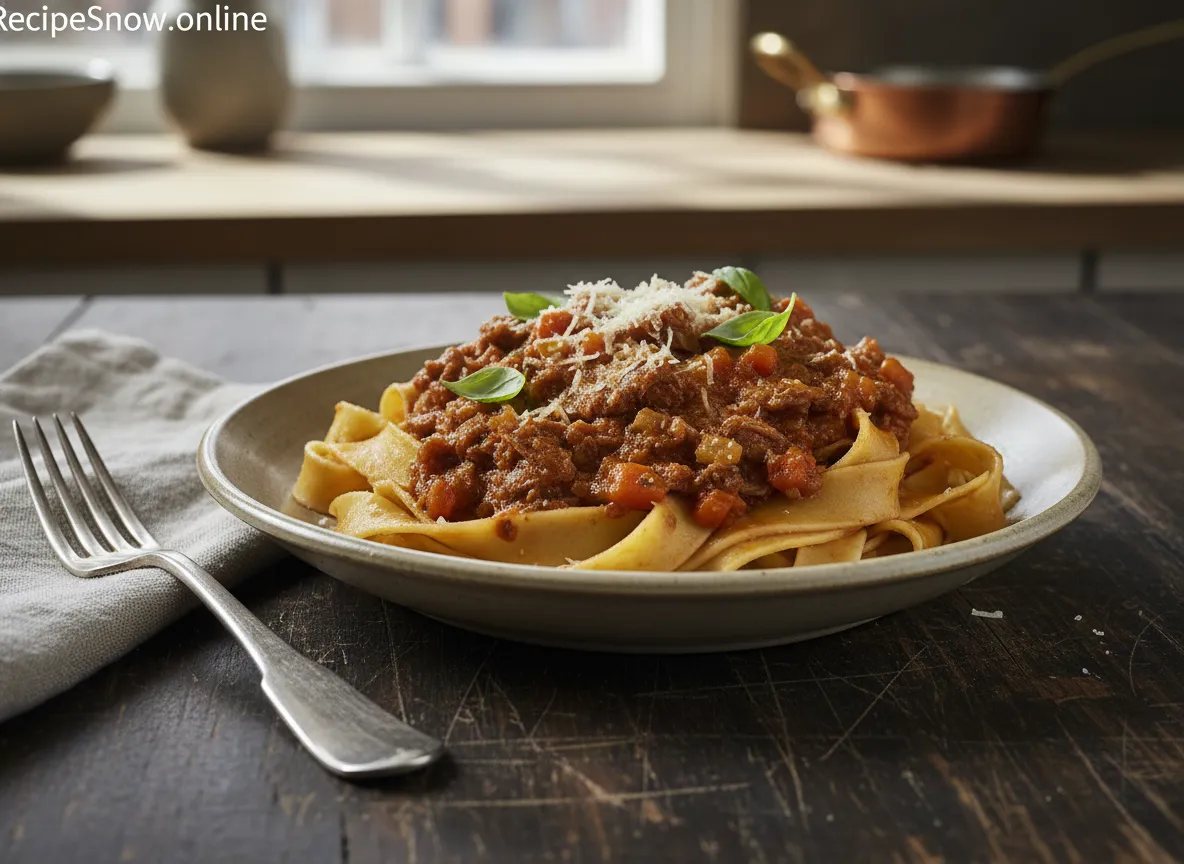
Global Recipe Note — Beef Ragu with Pappardelle Recipe
This Beef Ragu with Pappardelle Recipe adapts to available pantry staples without compromising engagement. If canned tomatoes are brighter or sweeter than preferred, add a splash of balsamic or a pinch of sugar to balance acidity. If wine is unavailable, use concentrated stock with a splash of vinegar for acidity. Local smoked meats such as pancetta can be swapped for bacon or cured ham to retain savory depth. The essential technique is constant: brown, deglaze, slow braise, and finish with careful seasoning and an emulsifying splash of pasta water or cream.
Variations of Beef Ragu with Pappardelle Recipe
Classic slow cooked ragu
Add a small amount of chopped veal or pork in the sear stage for more complex meat flavor, then proceed as written for a traditional ragout texture.
Tomato free ragu
Replace crushed tomatoes with reduced beef stock, a splash of red wine, and roasted red peppers for a deep, savory, tomato free sauce. Finish with a hint of anchovy paste for umami if desired.
Mushroom and red wine ragu
Increase mushrooms and reduce meat slightly to highlight earthy flavors. Finish with a knob of butter and parsley for balance.
Slow cooker adaptation
After searing aromatics and beef, transfer to a slow cooker with tomatoes and stock. Cook on low for six to eight hours then shred beef and reduce sauce on the stove briefly if needed.
Pairing and Serving Suggestions
Serve beef ragu with wide pappardelle to showcase the sauce. Complement the plate with a crisp green salad dressed in lemon vinaigrette to cut richness. Roasted seasonal vegetables provide texture contrast and color. For beverages choose a medium to full bodied red wine or a robust ale that can stand up to concentrated tomato and beef flavors. Finish with aged hard cheese and a drizzle of good olive oil for aroma and silk.
Side Dishes Name
- Simple green salad with lemon vinaigrette
- Roasted garlic broccolini or broccoli
- Crispy polenta cakes
- Warm crusty bread for mopping sauce
- Fennel and orange salad for bright contrast
Quick Nutrition Snapshot
Calories ~720 per serving (estimate)
Protein ~45 g per serving (estimate)
Carbohydrates ~65 g per serving (estimate)
Fat ~28 g per serving (estimate)
Values are approximate and vary by meat cut, pasta portion, and finishing choices.
Common Mistakes and How to Fix Them
Ragu is thin or watery
Fix: Reduce uncovered over medium heat until thick. Stir in a small amount of tomato paste or finish with a knob of butter to add body.
Meat is stringy or tough
Fix: Continue braising until collagen converts to gelatin and the meat shreds easily. Low slow heat is the cure for toughness.
Flavor is flat
Fix: Taste and adjust with salt, a splash of vinegar or lemon to brighten, and a small pinch of sugar if acidity is too sharp. Finish with fresh herbs for lift.
Pasta and sauce do not bond
Fix: Reserve pasta water and toss pasta with sauce in a wide pan over heat, adding water a little at a time to help sauce cling and emulsify.
FAQ About Beef Ragu with Pappardelle Recipe
Can I make Beef Ragu with Pappardelle Recipe ahead?
Yes. Ragu often tastes better after resting overnight. Reheat gently and add a splash of stock or pasta water to refresh texture.
What cut of beef works best for Beef Ragu with Pappardelle Recipe?
Chuck or short ribs are ideal because their connective tissue breaks down and yields a silky, flavorful ragu after slow braising.
How long should I simmer the ragu?
Simmer two to three hours until beef is tender and sauce is concentrated. Check tenderness and adjust time as needed rather than relying on clock time alone.
Can I use a pressure cooker for Beef Ragu with Pappardelle Recipe?
Yes. Sear as directed, then pressure cook for about 45 to 60 minutes depending on cut. Finish by shredding meat and reducing the sauce on the stove.
How do I store leftovers of Beef Ragu with Pappardelle Recipe?
Cool fully and refrigerate in airtight containers for up to four days or freeze portions for up to three months. Thaw in the refrigerator and reheat gently.
Summary
Beef Ragu with Pappardelle Recipe rewards patience and simple technique. Brown the beef well, reduce wine to concentrate flavor, and braise slowly until meat melts into a rich sauce. Toss wide pappardelle with the ragu using reserved pasta water so ribbons hold every strand of flavor. Small touches like finishing with cream or a drizzle of olive oil make the dish sing.
Try this ragu for a weekend dinner or special meal. Make extra, taste again the next day, and share the recipe with friends who love big flavor. Which variation will you test first, and what side will you choose to balance the plate?