Estimated prep time 20 minutes
Cook time 3 to 4 hours (braise), or 8 hours on low in a slow cooker
Total time 3 hours 20 minutes to 8 hours 20 minutes
Servings 6 to 8
Introduction — Classic Pot Roast Recipe
The best pot roast begins with a bold sear and ends with meat that falls apart at the touch of a fork. This Classic Pot Roast Recipe focuses on transforming a humble chuck roast into a rich, deeply flavored centerpiece using low, slow heat and a few smart techniques. Expect a caramelized crust, a silky, reduced braising liquid, and vegetables cooked to just-tender perfection. This recipe is about rhythm: brown, deglaze, braise, rest, and finish — each step contributes to a pot of comfort that rewards patience and simple attention.
Table of Contents
Ingredients for Classic Pot Roast Recipe
Use imperial or metric measurements as you prefer. Swap equivalent pantry items if needed but keep proportions stable for balance.
- Boneless chuck roast — 3 to 4 pounds (1.4–1.8 kg), trimmed of excessive fat
- Kosher salt — 1 1/2 teaspoons plus more to taste
- Freshly ground black pepper — 1 teaspoon
- Neutral oil (vegetable or canola) — 2 tablespoons
- Unsalted butter — 2 tablespoons (optional, for finishing)
- Yellow onion — 1 large, cut into wedges
- Carrots — 4 medium, cut into 2-inch pieces
- Celery stalks — 3, cut into 2-inch pieces
- Garlic — 4 cloves, smashed
- Tomato paste — 1 tablespoon
- Dry red wine — 3/4 cup (180 ml) or additional stock for alcohol-free option
- Beef stock — 3 cups (720 ml), low sodium preferred
- Bay leaves — 2
- Fresh thyme — 4 sprigs (or 1 teaspoon dried)
- Fresh rosemary — 2 sprigs (optional)
- Whole peppercorns — 8 to 10 (optional)
- Worcestershire sauce — 1 tablespoon (optional, for depth)
- Small potatoes or parsnips — 1 pound (optional, added mid-braise)
How to Make Classic Pot Roast Recipe
This step-by-step method focuses on flavor development at each stage. Read through before starting, then follow the steps closely for best outcomes.
Step 1
Bring the roast to room temperature for 30 minutes before cooking. Pat it very dry with paper towels — dryness helps form a deep, even crust when searing. Season generously with kosher salt and black pepper, pressing the seasoning into the meat.
Step 2
Heat a large, heavy Dutch oven or braiser over medium-high heat until shimmering. Add the neutral oil. When the oil is hot but not smoking, sear the roast on all sides until a deep mahogany crust forms — about 4 to 5 minutes per side. Use tongs and rotate to develop even color. Don’t crowd the pan; sear in two batches if necessary. Transfer the browned roast to a plate and tent with foil.
Step 3
Lower the heat to medium. Add the onion wedges, carrots, and celery to the pot and cook, stirring occasionally, until the vegetables pick up color and the onions soften — roughly 6 to 8 minutes. Stir in the smashed garlic and tomato paste; cook one minute to remove raw tomato flavor and allow the paste to caramelize slightly. Scrape any browned bits off the bottom of the pan with a wooden spoon — these fond bits will enrich the braise.
Step 4
Deglaze the pot with the dry red wine, scraping and stirring to dissolve browned bits. Allow the wine to reduce by half, concentrating its flavor, about 2 to 3 minutes. If you prefer not to use wine, deglaze with a splash of stock or beef broth instead. Return the roast to the pot and add the beef stock until it comes about halfway up the roast.
Step 5
Tie the thyme and rosemary into a bundle or sprinkle dried herbs in, add bay leaves and optional whole peppercorns, then add a tablespoon Worcestershire sauce for umami if using. Bring the pot to a gentle simmer, then cover with a tight-fitting lid and transfer to a 300°F (150°C) oven. Braise for 3 to 4 hours, turning the roast halfway through, until the meat is fork-tender and easily pulls apart. For a slow-cooker approach, set on low for 8 hours with identical aromatics.
Step 6
About 60 to 90 minutes before the roast finishes, add small potatoes or parsnips if desired. This timing ensures vegetables are tender but not mushy. Check liquid level periodically; if the braising liquid reduces too far, add a little hot stock or water to maintain moisture while concentrating flavor.
Step 7
When the roast is done, transfer it to a cutting board and tent loosely with foil to rest for 10 to 15 minutes. Strain the braising liquid into a saucepan, pressing on solids to extract juices. Skim off excess fat and simmer the strained liquid to reduce until slightly thickened, about 8 to 10 minutes. If you prefer a thicker gravy, whisk a small cornstarch slurry (1 teaspoon cornstarch mixed with 1 tablespoon cold water) into the simmering liquid until it reaches the desired sheen and coat.
Step 8
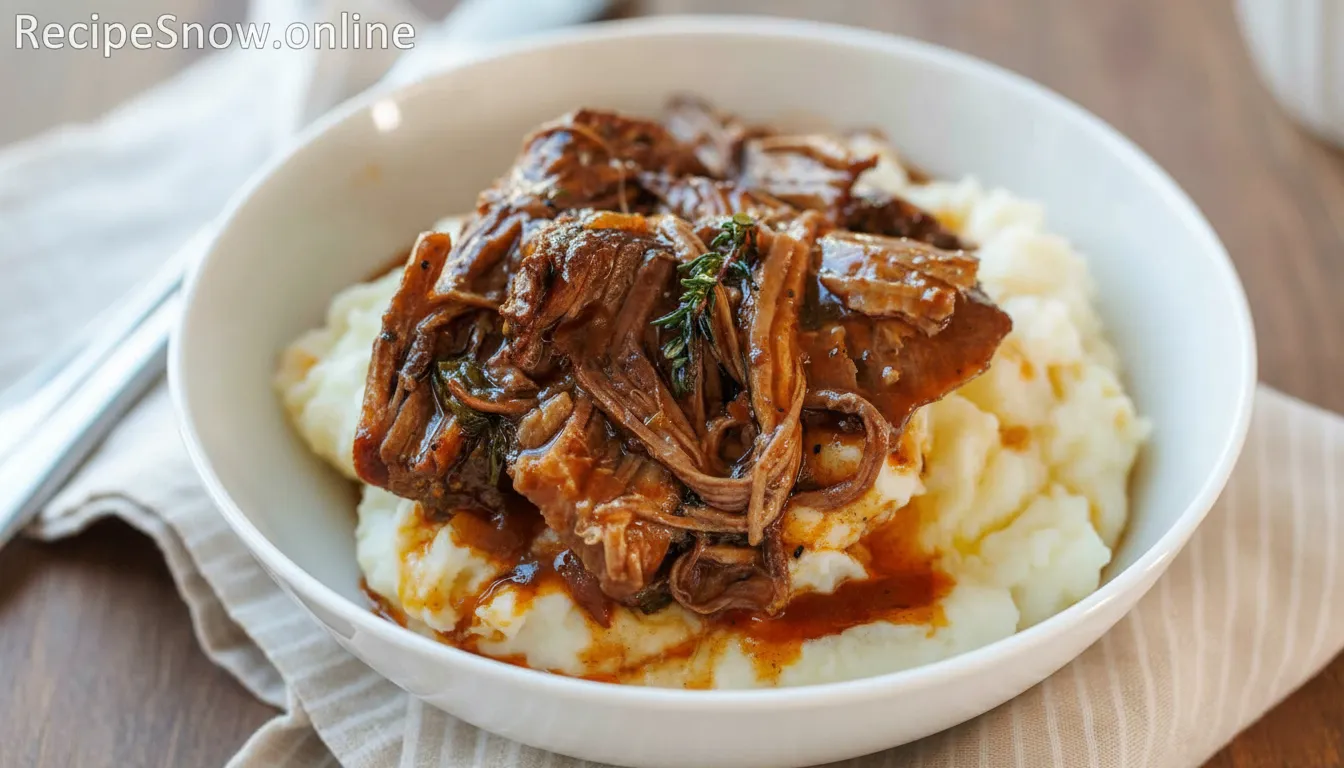
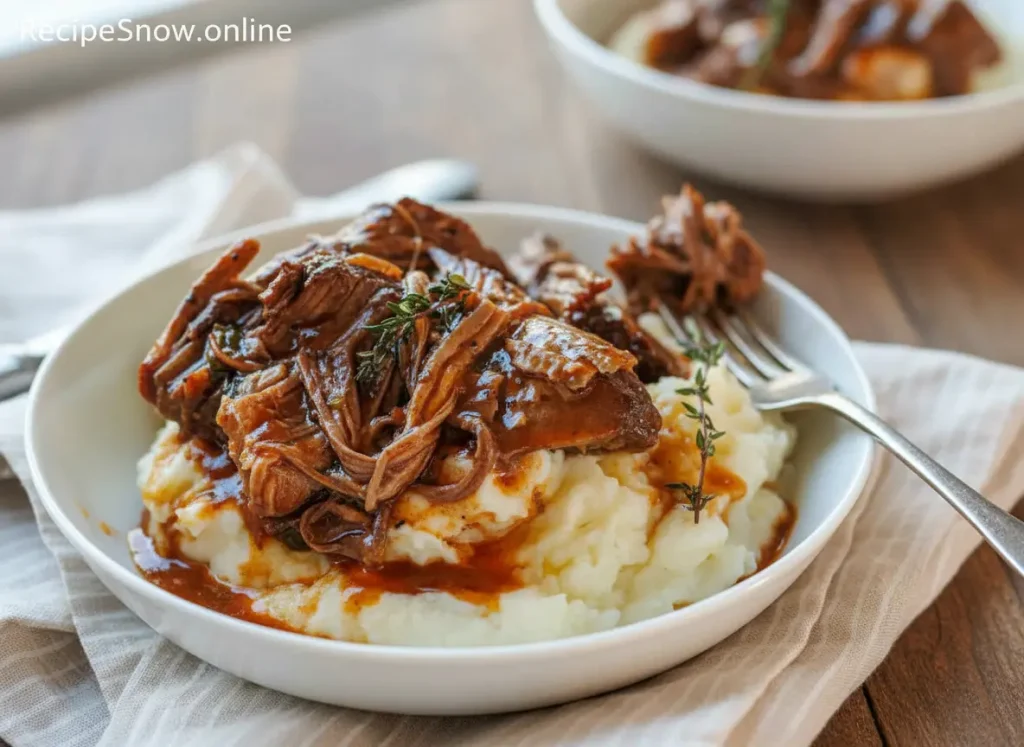
Shred the roast with two forks into large nappe-worthy pieces or slice it against the grain into thick slices. Return the meat to the pot and spoon reduced gravy over it to keep it moist. Serve with roasted or braised vegetables and the rich gravy spooned generously over the top.
Chef trick
Brown the roast without rushing; a good crust equals depth. Keep the braise at a bare simmer — gentle heat breaks down collagen without drying muscle fibers.
Rest the meat before shredding. Resting allows juices to redistribute; shredding immediately causes them to spill and leaves the meat drier.
Pro Tips for Classic Pot Roast Recipe
- Choose well-marbled chuck roast; connective tissue melts into gelatin during slow cooking, giving silkiness to the sauce.
- Season in layers: a base seasoning on raw meat, then adjust the braising liquid at the end after reduction for balanced saltiness.
- Deglaze thoroughly and reduce the wine or stock before adding the roast back — concentrated flavors make a better sauce.
- Don’t overcook vegetables early; add them later in the braise so they keep shape and texture.
- For a glossy finish, whisk a small knob of cold butter into the strained sauce off the heat before serving.
Global Recipe Note — Classic Pot Roast Recipe
This Classic Pot Roast Recipe scales easily across ingredient availability while preserving its comforting identity. Swap wine for local beers or stronger broths if desired. Use regional root vegetables or starchy tubers in place of potatoes to adapt to local seasons. The technique — sear, deglaze, braise low and slow, and finish with a reduced, enriched gravy — remains constant; your pantry substitutions should respect moisture balance and bold aromatics to keep engagement high.
Variations of Classic Pot Roast Recipe
Garlic-and-herb pot roast
Roast with a garlic-anchored herb rub (rosemary, thyme, parsley) applied before searing. Add extra fresh herbs toward the end for a brighter finish.
Asian-inspired pot roast
Deglaze with soy sauce and rice wine, add star anise and ginger, and finish with a splash of fish sauce and toasted sesame oil for umami depth. Serve with steamed rice or noodles.
Red-wine and mushroom pot roast
Increase mushrooms and use a hearty red wine for deglazing. Add a touch of cream or butter at the end for aromatic silkiness.
Low-sodium, vegetable-forward pot roast
Use low-sodium stock and increase aromatic vegetables and herbs. Finish with lemon zest for lift rather than additional salt.
Pairing and Serving Suggestions for Classic Pot Roast Recipe
Classic pot roast pairs with starchy sides that soak up gravy: creamy mashed potatoes, buttered egg noodles, or polenta. Add a bright vegetable or salad to cut richness — a quick pickled slaw or blanched greens tossed with lemon vinaigrette works well. For beverages, opt for a medium-bodied red wine, amber ale, or a crisp cider to balance the roast’s savory depth.
Side Dishes Name
- Creamy mashed potatoes with chives
- Honey-glazed roasted carrots
- Buttered green beans with toasted almonds
- Herbed buttered egg noodles
- Simple mixed greens with lemon vinaigrette
Quick Nutrition Snapshot
Calories ~520 per serving (estimate)
Protein ~38 g per serving (estimate)
Carbohydrates ~18 g per serving (estimate)
Fat ~30 g per serving (estimate)
Values are approximate and vary by cut of beef, added butter, and portion sizes.
Common Mistakes and How to Fix Them
Meat is tough
Fix: Continue gentle braising until collagen fully breaks down; check for tenderness rather than relying solely on time. Higher heat speeds evaporation but can toughen connective tissue.
Sauce is thin or lacks flavor
Fix: Reduce the strained liquid until concentrated, then adjust seasoning. A small amount of concentrated stock or a splash of balsamic vinegar can round and intensify the sauce.
Vegetables are mushy
Fix: Add vegetables later in the braise process. Root vegetables generally need only 45–60 minutes; potatoes need 30–45 minutes depending on size.
Dish is too salty
Fix: Add unsalted stock or water, a splash of acid (vinegar or lemon), and a peeled raw potato simmered briefly to absorb some salt, then discard potato.
FAQ About Classic Pot Roast Recipe
Can Classic Pot Roast Recipe be made in a slow cooker?
Yes. Sear the meat first for flavor, then transfer to the slow cooker with aromatics and liquid. Cook on low for 8 hours for tender results.
How do I store leftovers of Classic Pot Roast Recipe?
Cool and refrigerate in an airtight container for up to four days. Reheat gently on the stove with a splash of stock to loosen the sauce.
Can I freeze Classic Pot Roast Recipe?
Yes. Cool completely and freeze in portions for up to three months. Thaw overnight in the refrigerator before reheating slowly.
What is the best cut of beef for Classic Pot Roast Recipe?
Chuck roast is ideal for classic pot roast due to its marbling and connective tissue, which become tender and flavorful after long cooking.
How do I make a thicker gravy for Classic Pot Roast Recipe?
Simmer the strained braising liquid to reduce, or whisk in a cornstarch slurry, then simmer until glossy and slightly thickened. Finish with a pat of butter for sheen.
Summary
Classic Pot Roast Recipe is a reliable, comforting meal built on a few fundamental techniques: a deep sear for flavor, a careful deglaze for depth, slow braising for tenderness, and a thoughtful finish for balance. The payoff is a pot of meat and vegetables that taste richer than the sum of their parts and a sauce that begs to be mopped up with bread or mashed potatoes.
Make this roast when you want food that feeds a group, warms a house, and rewards patience. Try one variation to suit your pantry, serve with a bright salad to cut richness, and savor how simple steps deliver soulful results. Which side will you pair with your roast, and which variation will you test first?