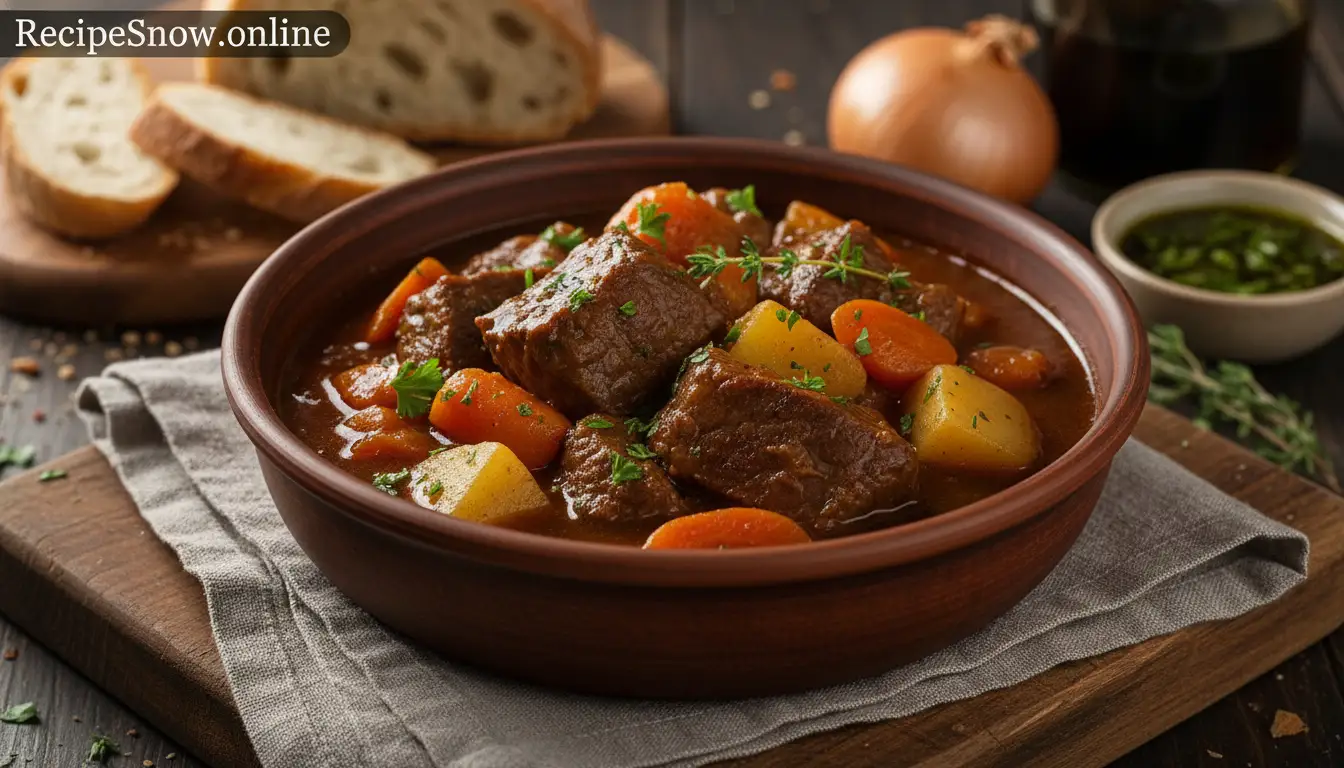
Estimated prep time 25 minutes
Cook time 2 to 3 hours (stovetop or oven) or 8 hours (slow cooker)
Total time 2 hours 25 minutes to 8 hours 25 minutes
Servings 6 generous bowls
Introduction — Beef Stew Recipe
This Classic Beef Stew Recipe turns basic ingredients into deep comfort. A good stew is about texture and balance. You want beef that yields to a fork, a gravy that clings, and vegetables that still hold shape. This recipe walks you through browning, deglazing, and slow braising. Expect a savory, slightly sweet broth. Expect tender meat and a finish you will spoon over bread or potatoes. Read on for precise steps, chef tricks, and adaptable variations that keep readers engaged until the last bite.
Table of Contents
Ingredients for Beef Stew Recipe
Use imperial or metric measurements. Swap similar local pantry items while keeping proportions.
- Beef chuck — 2 1/2 to 3 pounds, cut into 1 1/2-inch cubes
- Kosher salt — 1 1/2 teaspoons, plus more to taste
- Freshly ground black pepper — 1 teaspoon, plus more to taste
- All-purpose flour — 1/3 cup for dredging (optional for thicker gravy)
- Neutral oil (vegetable or canola) — 2 tablespoons
- Unsalted butter — 2 tablespoons
- Yellow onion — 1 large, large dice
- Carrots — 3 medium, cut into 1-inch pieces
- Celery stalks — 2, sliced
- Garlic — 3 cloves, smashed
- Tomato paste — 2 tablespoons
- Red wine — 3/4 cup (or additional stock for alcohol-free)
- Beef stock — 4 cups, low sodium preferred
- Worcestershire sauce — 1 tablespoon
- Bay leaves — 2
- Fresh thyme — 4 sprigs (or 1 teaspoon dried)
- Small potatoes or baby potatoes — 1 pound, halved
- Mushrooms — 8 ounces, halved or quartered (optional)
- Frozen peas — 1 cup (added at the end)
- Fresh parsley — 2 tablespoons chopped for finish
How to Make Beef Stew Recipe
This method focuses on developing deep flavor without fuss. Read through before starting, then tackle each step with calm purpose.
Step 1
Pat the beef cubes dry and season with salt and pepper. Dry meat browns better. If you want a thicker final gravy, lightly toss the beef in flour and shake off excess.
Step 2
Heat a large heavy pot or Dutch oven over medium-high heat. Add the oil and half the butter. When hot, add beef in a single layer and brown on all sides. Work in batches to avoid steaming. Take your time — deep color equals deeper flavor. Transfer browned beef to a plate.
Step 3
Reduce heat to medium. Add remaining butter and the onion, carrots, and celery. Cook, stirring, until vegetables soften and start to color, about 6 to 8 minutes. Add garlic and cook thirty seconds until fragrant. Stir in tomato paste and cook one minute to remove rawness.
Step 4
Pour in the red wine to deglaze the pot, scraping up browned bits. Let the wine reduce by half, concentrating flavor. Return the beef and any accumulated juices to the pot. Add beef stock, Worcestershire sauce, bay leaves, and thyme. The liquid should barely cover the meat. Bring to a simmer.
Step 5
Cover the pot and transfer to a 325°F (160°C) oven, or simmer gently on the stove over low heat. Braise for 2 to 3 hours until beef is fork-tender. For a slow-cooker approach, transfer everything to the slow cooker and cook on low for 8 hours. Check occasionally and skim any excess fat from the surface.
Step 6
About 30 to 45 minutes before the end, add potatoes and mushrooms. They should become tender but not fall apart. Taste the braise and adjust salt and pepper. If the sauce is thin, reduce it uncovered on the stove, or thicken with a cornstarch slurry (1 tablespoon cornstarch mixed with 1 tablespoon cold water) stirred in and simmered until glossy.
Step 7
Five minutes before serving, stir in frozen peas so they warm without losing color. Remove bay leaves and thyme stems. Finish with chopped parsley and a final swirl of butter for sheen.
Step 8
Serve the Beef Stew Recipe hot over mashed potatoes, buttered noodles, or with thick slices of crusty bread to mop up the gravy. Offer additional cracked pepper at the table.
Chef trick
Sear beef in hot oil without crowding. Browning creates Maillard flavors that lift the entire stew.
Add root vegetables later so they keep their shape and texture. Overcooked vegetables make stew feel heavy.
Pro Tips for Beef Stew Recipe
- Use chuck roast: it becomes tender and gelatinous when slow-cooked.
- Brown meat well; color equals flavor. Don’t rush this step.
- Deglaze properly — scrape bits into the liquid for depth.
- Keep the braise at a gentle simmer, not a roar. Gentle heat breaks down collagen.
- If using wine, choose one you would drink. Cheap or bitter wine ruins the base.
- Rest the stew briefly off heat before serving; flavors settle and deepen.
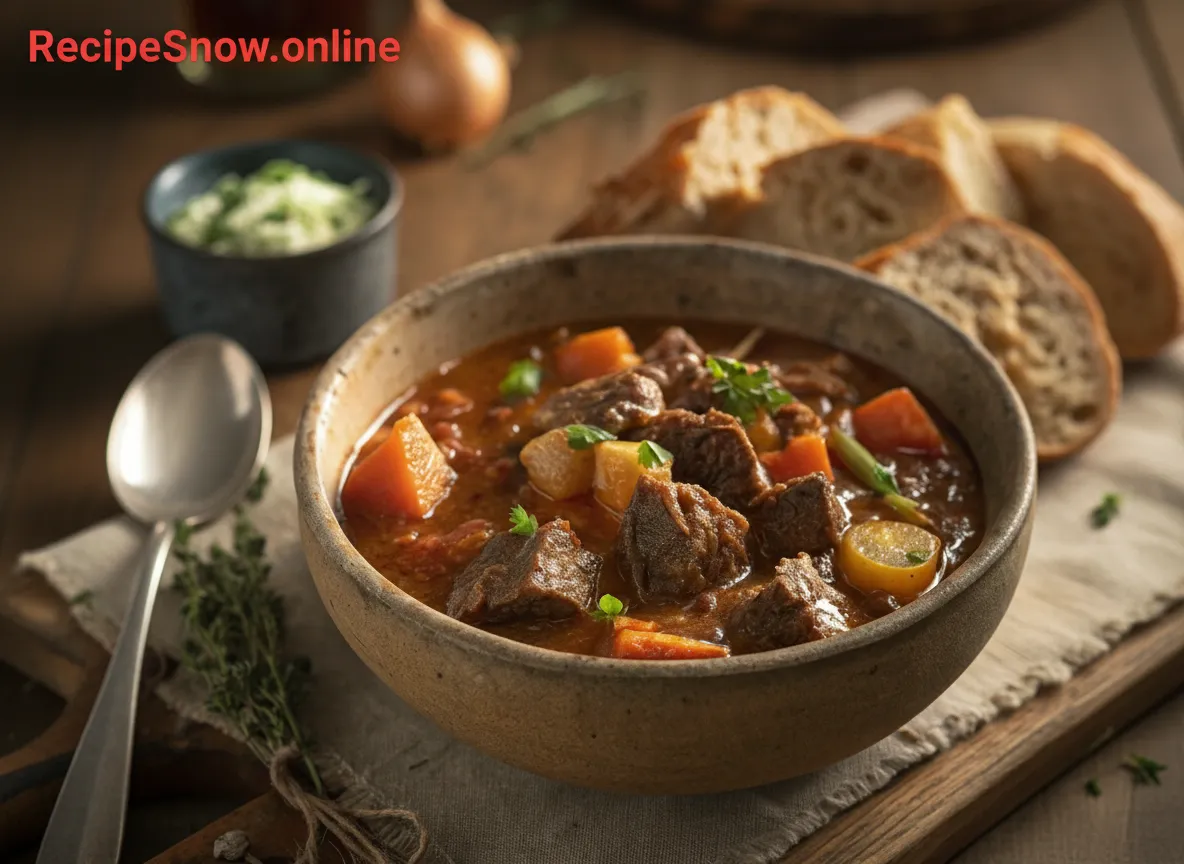
Global Recipe Note — Beef Stew Recipe
This Beef Stew Recipe adapts easily to local ingredients without losing the core appeal. Swap stock types, use local root vegetables, or replace wine with a mild beer. The essential technique remains the same: brown, deglaze, braise, and finish. These adjustments preserve texture and flavor while making the recipe approachable across pantries.
Variations of Beef Stew Recipe
Tomato-forward beef stew
Add a can of crushed tomatoes with the stock and reduce slightly longer. Tomatoes add acidity and a brighter profile.
Herb-rich stew
Add rosemary and bay at the start, and finish with a gremolata (lemon zest, garlic, parsley) for fresh contrast.
Guinness-style beef stew
Replace half the stock with stout beer and add a splash of soy sauce for umami. The beer yields a malty backbone and richer sauce.
Slow-cooker Moroccan twist
Add warm spices like cumin and cinnamon, dried apricots for sweetness, and finish with toasted almonds and cilantro.
Pairing and Serving Suggestions for Beef Stew Recipe
Serve hearty stew with creamy mashed potatoes, buttered egg noodles, or thick slices of rustic bread. A simple green salad dressed in bright vinegar balances richness. For drinks, choose a sturdy red, a brown ale, or sparkling water with lemon. Offer pickles or quick-pickled red onions for an acidic counterpoint on the side.
Side Dishes Name
- Creamy mashed potatoes
- Buttered egg noodles
- Crusty country bread
- Roasted root vegetable medley
- Quick vinegar slaw
Quick Nutrition Snapshot
Calories ~520 per serving (estimate)
Protein ~35 g per serving (estimate)
Carbohydrates ~28 g per serving (estimate)
Fat ~28 g per serving (estimate)
Values are approximate and vary by cut of beef and portion sizes.
Common Mistakes and How to Fix Them
Stew is thin and lacks body
Fix: Reduce the braising liquid until concentrated. Alternatively, whisk in a cornstarch slurry and simmer until glossy. Mash a few cooked vegetables into the sauce for natural thickening.
Meat is tough after cooking
Fix: Continue slow cooking until collagen converts to gelatin. Test for tenderness, not time. Low, sustained heat is kinder to tough cuts.
Vegetables are mushy
Fix: Add potatoes and delicate vegetables later in the cook. Aim for tender-crisp vegetables, not puree.
Sauce tastes flat
Fix: Brighten with acid — a splash of vinegar or lemon. Finish with fresh herbs and a knob of butter for richness and gloss.
FAQ About Beef Stew Recipe
Can I make Beef Stew Recipe ahead of time?
Yes. Stew often tastes better after resting overnight. Reheat gently and add a splash of stock if it has thickened.
Can I freeze Beef Stew Recipe?
Yes. Cool completely and freeze in portions for up to three months. Thaw overnight and reheat slowly on the stove.
What cut of beef is best for Beef Stew Recipe?
Chuck is ideal because its marbling breaks down into gelatin, producing tender, flavorful results after long cooking.
How do I thicken Beef Stew Recipe without flour?
Reduce the sauce by simmering uncovered, or mash a portion of cooked root vegetables and stir them back in for natural thickening.
Can I make Beef Stew Recipe in a pressure cooker?
Yes. Brown the meat first, then cook under high pressure for about 35 to 40 minutes, followed by a natural release. Add potatoes and mushrooms and cook briefly if needed.
Summary
This Classic Beef Stew Recipe is a dependable, soulful meal built on simple techniques: proper browning, mindful deglazing, and gentle braising. Small details — dried flour for a silky coat, a splash of wine for depth, and finishing herbs for brightness — make a difference. The method is forgiving and adaptable, so you can tailor spices, vegetables, or liquids without losing the stew’s comforting character.
Make this stew when you want something that feeds a crowd and warms the kitchen. Try a variation, share your tweaks, and tell others which side you served. Which twist will you try first: a beer-rich braise or a tomato-forward pot? Did you add a bright gremolata, or keep it classic and deep? Leave a note and a photo if you like — cooks learn from each other.