Estimated prep time 25 minutes
Cook time 3 to 4 hours braise time
Total time 3 hours 25 minutes to 4 hours 25 minutes
Servings 4 to 6 generous portions
Wine-Braised Short Ribs Recipe Introduction
This Wine-Braised Short Ribs Recipe turns coarse cut beef into silk. A hearty sear, a rich red wine braise, and slow, low heat transform tough collagen into glossy gelatin. The result is ribs that fall apart at the touch of a fork and a sauce so concentrated you will want to drizzle it over everything. Read every step carefully and follow timing cues to achieve the restaurant quality finish at home. Expect deep, savory aroma, lingering wine notes, and a balance of acidic lift and buttered sheen.
Table of Contents
Wine-Braised Short Ribs Recipe Ingredients
Use quality short ribs and good drinking wine for best results. Substitutions are noted where useful, but maintain ratios for texture.
- Beef short ribs, bone in — 3 to 4 pounds total, ideally English cut
- Kosher salt — 1 1/2 teaspoons, plus more to taste
- Freshly ground black pepper — 1 teaspoon
- Neutral oil — 2 tablespoons for searing
- Unsalted butter — 2 tablespoons for finishing
- All-purpose flour — 2 tablespoons, optional for light dredge
- Yellow onion — 1 large, sliced into thick rounds
- Carrots — 3 medium, cut into large chunks
- Celery stalks — 2, sliced into large pieces
- Garlic — 4 cloves, smashed
- Tomato paste — 2 tablespoons
- Dry red wine — 2 cups, good quality that you enjoy drinking
- Beef stock — 2 cups, low sodium
- Fresh thyme — 4 sprigs
- Bay leaves — 2
- Fresh rosemary — 1 sprig, optional
- Whole black peppercorns — 8 to 10, optional
- Pearl onions or shallots — 8 to 10, optional for braise garnish
- Fresh parsley — chopped for garnish
How to Make Wine-Braised Short Ribs Recipe
Prepare mise en place and read through the method before starting. This dish rewards organization and patience.
Step 1
Bring short ribs to room temperature and pat completely dry. Season all sides with kosher salt and black pepper. A dry surface browns better and yields more savory fond for the sauce.
Step 2
Heat a large heavy Dutch oven over medium high heat. Add the neutral oil. When shimmering but not smoking, sear ribs in batches without crowding the pot. Brown deeply on all sides, about three to four minutes per side. Transfer browned ribs to a plate and set aside. Browning builds flavor and creates the base of the braise.
Step 3
Reduce heat to medium. Add onion, carrots, and celery to the pot and cook until nicely colored, about six to eight minutes. Stir occasionally so vegetables do not scorch. Add smashed garlic and cook thirty seconds. Stir in tomato paste and cook for one to two minutes until paste darkens slightly and its raw edge softens.
Step 4
Pour in red wine to deglaze the pot, scraping with a wooden spoon to lift browned bits from the bottom. Bring wine to a simmer and reduce by about one third to concentrate flavor, two to three minutes. This concentration prevents a thin, alcoholic sauce and deepens the braise foundation.
Step 5
Return the short ribs and any collected juices to the pot. Add beef stock so liquid comes halfway up the sides of the ribs. Add thyme, rosemary if using, bay leaves, and whole peppercorns. Bring to a gentle simmer. Cover the pot with a tight fitting lid and transfer to a preheated oven set to 325 degrees Fahrenheit for three to four hours.
Step 6
Check for tenderness after three hours. Ribs should be so tender that meat slips from the bone. If not quite tender, continue braising, checking every twenty to thirty minutes. If cooking on the stovetop, maintain a very gentle simmer and monitor liquid level. Add a splash of stock if the liquid falls too low.
Step 7
When ribs are tender, transfer them gently to a tray and tent loosely with foil to keep warm. Strain the braising liquid through a fine mesh sieve into a saucepan, pressing on solids to extract flavor. Discard solids. Skim fat from the surface or cool and remove congealed fat if preferred for a leaner sauce.
Step 8
Reduce the strained braising liquid over medium heat until slightly thickened and glossy. For extra body, whisk in a pat of unsalted butter off heat for shine and mouthfeel. Taste and adjust seasoning with salt and a touch of black pepper.
Step 9
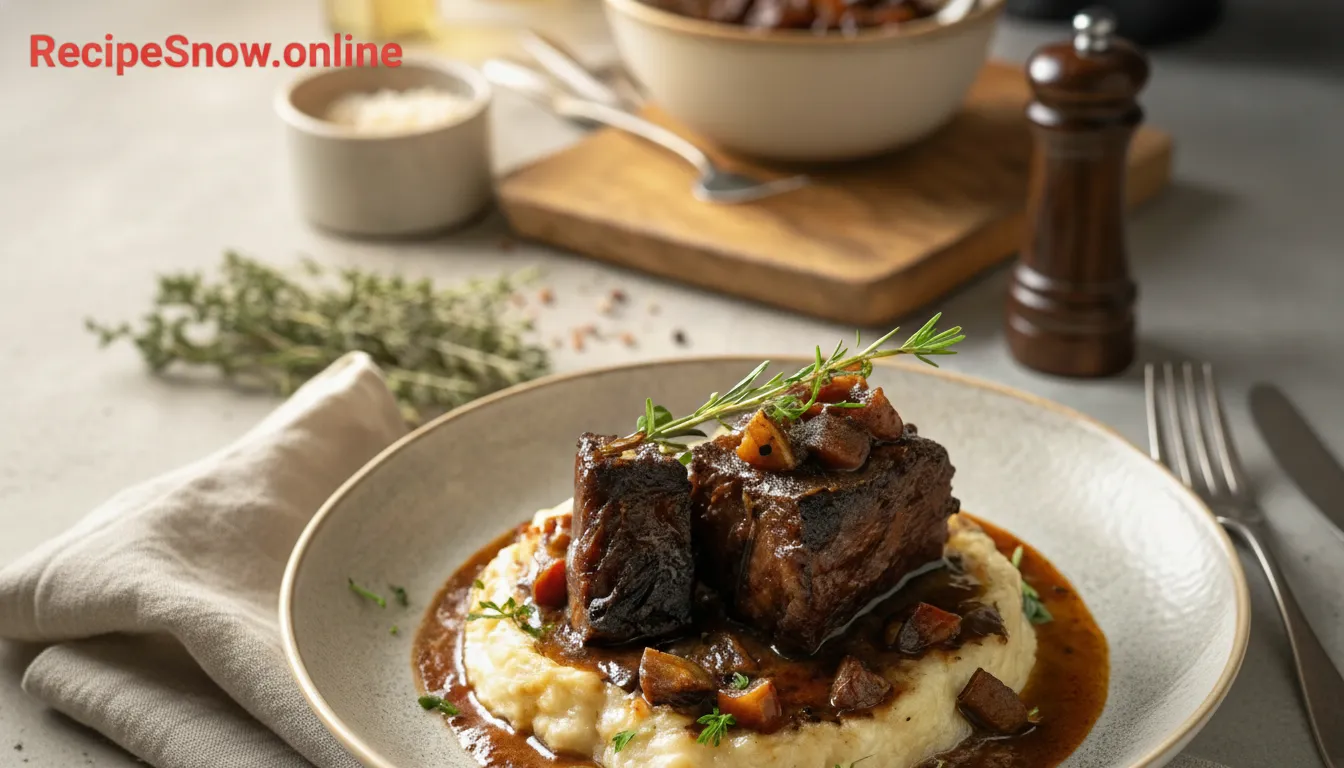
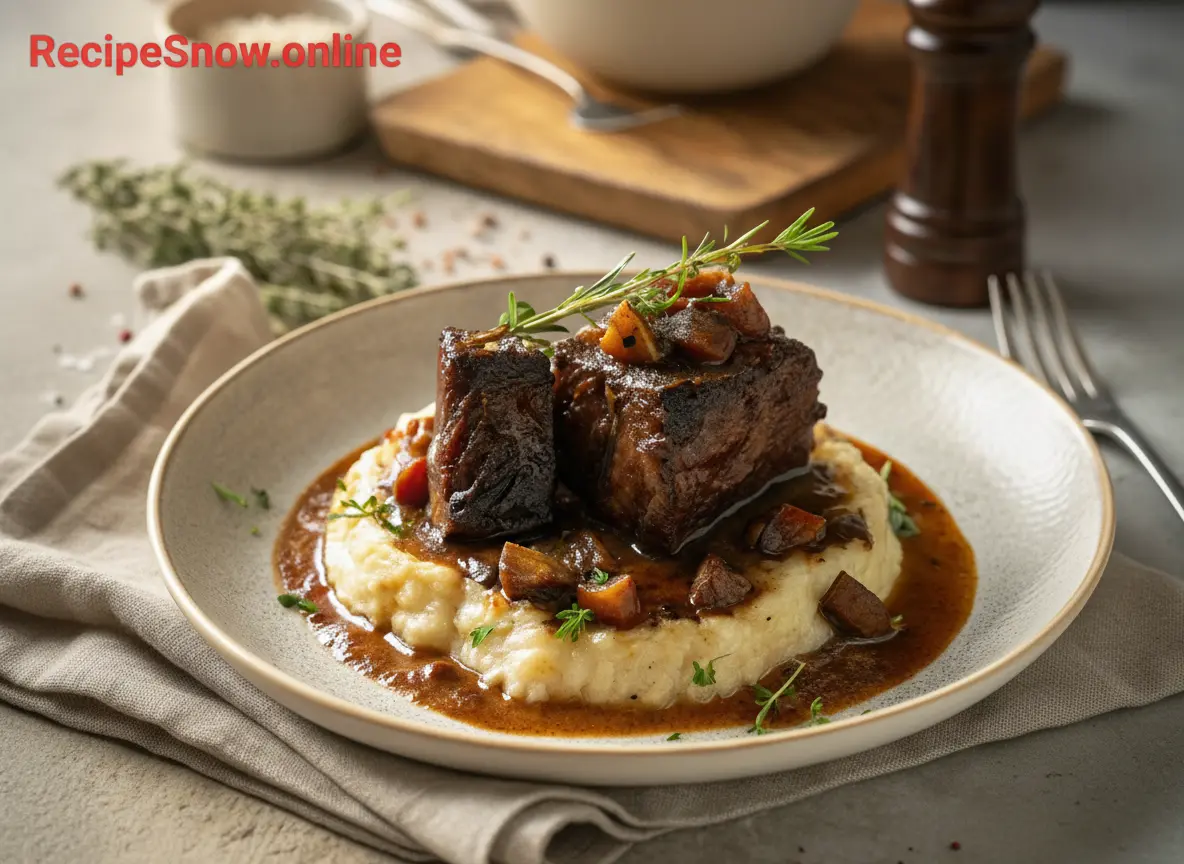
Serve short ribs with a generous ladle of reduced sauce. Garnish with chopped parsley and, if desired, roasted pearl onions or softened shallots. Pair with creamy mashed potatoes, polenta, or buttered egg noodles to soak up the sauce.
Chef trick
Sear ribs in a hot, dry pan and avoid overcrowding. Proper browning supplies the most important flavor building blocks.
Reduce wine before adding stock to prevent a flat or boozy final sauce. Concentration yields depth and avoids thinness.
Wine-Braised Short Ribs Recipe Pro Tips
- Choose well marbled short ribs for connective tissue that becomes gelatinic and luxurious when braised.
- Use a wine you like to sip. Bad wine flavors concentrate during reduction.
- Do not rush the braise. Low and slow yields the fork tender texture crucial to the dish.
- If you prefer a thicker gravy, whisk in a small slurry of cornstarch and water at the end, then simmer until glossy.
- Make ahead: flavor deepens overnight. Reheat gently and skillet sear briefly before serving for refreshed texture.
Wine-Braised Short Ribs Recipe Global Note
This Wine-Braised Short Ribs Recipe translates across pantries. If a particular wine is not available, use a robust fortified wine sparingly or replace half the wine with a concentrated stock. Preserve the method: sear, deglaze, add aromatics, and braise low and slow. Local vegetable swaps are fine, but avoid high water content items that dilute the sauce. Those technique constants preserve engagement and ensure a silky finish wherever it is prepared.
Wine-Braised Short Ribs Recipe Variations
Mushroom and thyme variation
Add a handful of cremini or shiitake mushrooms in the final hour of braising to concentrate umami. Finish with extra thyme for an earthy profile.
Balsamic and honey glaze
After reducing the sauce, stir in one tablespoon balsamic vinegar and one teaspoon honey to add sweet acidity that contrasts the meat.
Tomato and herb braise
Stir in one cup crushed tomatoes with the stock for a tang forward braise that pairs well with robust herbs like oregano and bay leaf.
Spiced red wine braise
Add whole cloves and a cinnamon stick to the braise for subtle warmth. Remove these before serving to avoid overpowering the beef.
Wine-Braised Short Ribs Recipe Pairing and Serving Suggestions
Serve these short ribs over a creamy base that soaks the sauce. Classic pairings include mashed potatoes, polenta, or parsnip purée. For a lighter contrast, serve with buttered egg noodles and a peppery arugula salad dressed in lemon vinaigrette. For beverages, choose the same family of red wine used in the braise, a medium bodied red, or a malty amber ale. Warm crusty bread also works beautifully for mopping up sauce.
Wine-Braised Short Ribs Recipe Side Dishes Name
- Creamy mashed potatoes
- Soft polenta with parmesan
- Buttered egg noodles with herbs
- Roasted root vegetables with thyme
- Arugula salad with lemon vinaigrette
Quick Nutrition Snapshot
Calories ~680 per serving
Protein ~45 g per serving
Carbohydrates ~12 g per serving
Fat ~48 g per serving
Estimates vary by cut and portion size; values are approximate.
Wine-Braised Short Ribs Recipe Common Mistakes and How to Fix Them
Sauce tastes thin or weak
Fix: Reduce the strained braising liquid until concentrated or add a small splash of reduced stock for more depth. A finishing pat of butter also adds gloss and richness.
Meat is stringy or tough
Fix: Continue braising at low temperature until the collagen breaks down. Fork tenderness is the true test, not strict time.
Sauce is overly acidic from wine
Fix: Add a touch of sugar or a small knob of butter to balance acidity. Simmer briefly to harmonize flavors.
Braised vegetables collapsed
Fix: Add delicate vegetables later in the braise or cook them separately and combine before serving to maintain texture contrast.
Wine-Braised Short Ribs Recipe FAQ
Can Wine-Braised Short Ribs Recipe be made ahead?
Yes. Make the dish a day ahead and refrigerate. Reheat gently and refresh under the broiler or in a hot skillet for a slight crust before serving.
What cut of beef is best for Wine-Braised Short Ribs Recipe?
Bone in short ribs, English cut, are ideal. They provide flavor, structure, and enough collagen to yield a silky final sauce.
Can I use a different liquid instead of red wine?
Yes. Use beef stock or a mixture of stock and a small amount of vinegar for acidity. Wine adds complexity but is replaceable if not desired.
How do I get a glossy sauce for Wine-Braised Short Ribs Recipe?
Skim fat, then reduce the strained braising liquid. Finish by whisking in cold butter off heat for sheen and mouthfeel.
Is Wine-Braised Short Ribs Recipe freezer friendly?
Yes. Cool completely and freeze in airtight containers for up to three months. Thaw overnight and reheat slowly to preserve texture.
Summary
This Wine-Braised Short Ribs Recipe is built on classic technique: sear for flavor, deglaze for depth, and braise low and slow until the meat becomes silk. The concentrated sauce and tender ribs create an elegant yet comforting plate that suits both weeknight dinners and special occasions. Small finishing touches like a pat of butter or a splash of balsamic elevate the dish to memorable levels.
Please try this recipe and share how it turned out. Tell us which variation you chose and what side dish you paired it with. Leave a comment, save the recipe to your collection, or share a photo of your plate so others can learn from your experience and adapt the method to their pantry. Which wine did you use, and what finishing touch made the dish yours?