
Estimated prep time 30 minutes (plus at least 1 hour resting at room temperature)
Cook time 1 hour 30 minutes to 2 hours 30 minutes depending on roast size and desired doneness
Total time 2 hours to 4 hours (including resting and carving)
Servings Serves 6 to 10 depending on roast size and appetite
Introduction — Standing Rib Roast Recipe
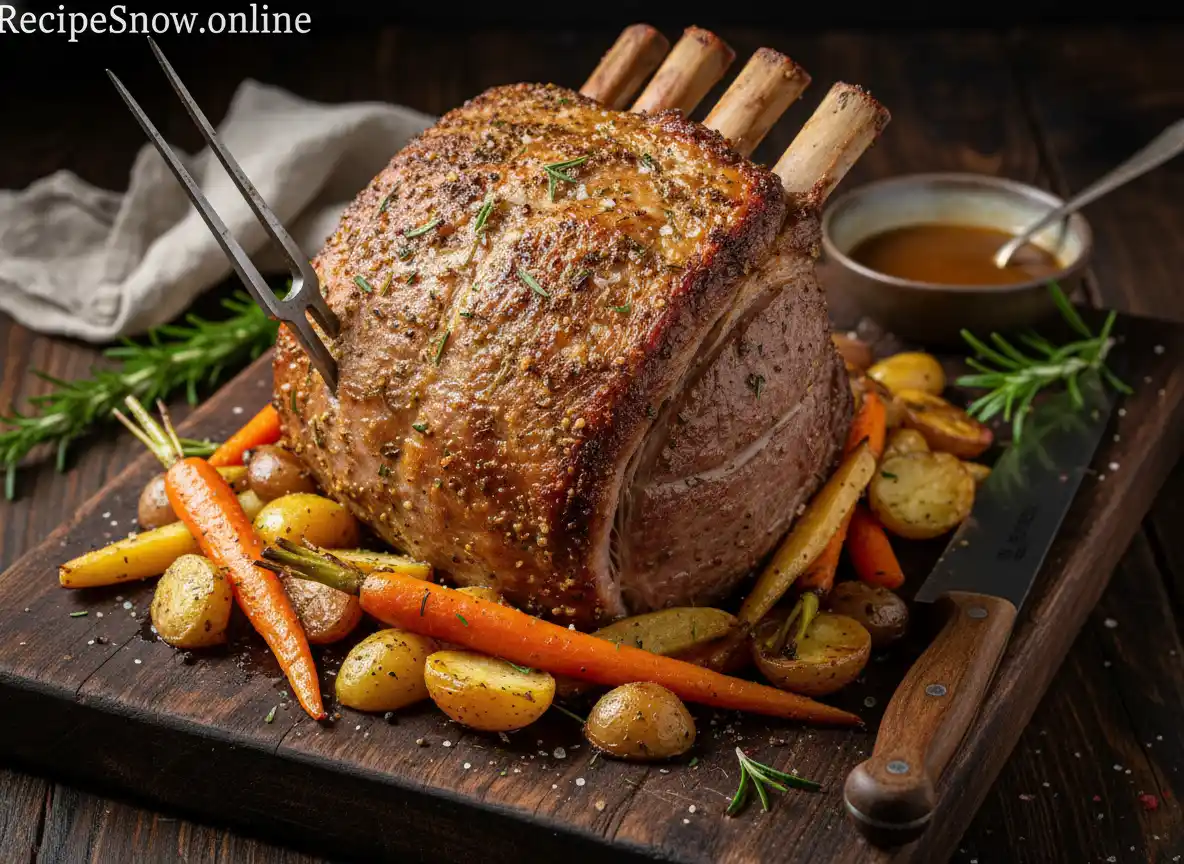
The Standing Rib Roast Recipe is the centerpiece beef dish that rewards calm technique. Start with a well-marbled rib roast, treat the meat gently, and use time and temperature to create a deeply flavored crust with a tender, rosy interior. This is not about heavy-handed tricks; it’s about controlled heat, good seasoning, and patient resting. Expect a savory crust, succulent meat, and a dramatic presentation when you carry the roast to the table. Read each step and follow the timing cues to get that coveted slice that holds juice yet pulls apart easily.
Table of Contents
Ingredients for Standing Rib Roast Recipe
Use imperial or metric measures. Choose a roast with visible marbling and an even fat cap for the best results. Allow the roast to come close to room temperature before cooking for even heat penetration.
- Prime rib roast (standing rib roast) — 5 to 7 ribs (about 6 to 10 pounds total) or adjust to head count
- Coarse kosher salt — 1 1/2 to 2 tablespoons (adjust to roast size)
- Freshly ground black pepper — 2 teaspoons
- Garlic powder — 1 teaspoon (optional)
- Onion powder — 1 teaspoon (optional)
- Fresh rosemary — 2 tablespoons chopped (or 1 tablespoon dried)
- Fresh thyme — 2 tablespoons chopped (or 1 tablespoon dried)
- Olive oil or softened butter — 2 to 4 tablespoons for rubbing
- Beef stock or au jus — 1 to 2 cups (for finishing and serving)
- Optional finishing butter — 2 tablespoons (for gloss and flavor)
How to Make Standing Rib Roast Recipe
Begin by planning: compute roast weight and resting time. Use an oven thermometer and an instant-read meat thermometer for reliability. The approach below balances a high-heat sear with a gentle roast for evenly pink centers.
Step 1
Trim as needed. If your butcher hasn’t tied the roast, have it tied into a uniform shape or do so at home with butcher’s twine. Trim excess loose fat but keep a good fat cap to baste the meat while it roasts. Remove any silver skin if present.
Step 2
Season generously: pat the roast dry with paper towels. Rub the exterior with olive oil or softened butter. Mix salt, pepper, garlic powder, onion powder, chopped rosemary, and thyme. Rub the seasoning all over the roast, pressing it into the surface. For deeper flavor, season the roast 24 hours ahead and leave uncovered in the refrigerator; then bring to room temperature two hours before cooking.
Step 3
Bring roast to near room temperature: let the seasoned roast sit on the counter for 60 to 90 minutes before roasting. This reduces temperature shock and promotes even doneness from edge to center.
Step 4
Preheat the oven to 500°F (260°C). Place the roast on a rack in a roasting pan, fat cap up, bones or rib rack forming the base. Insert an oven-safe probe thermometer into the thickest part of the roast without touching bone.
Step 5
Initial high-heat sear: roast at 500°F (260°C) for 15 to 20 minutes to develop a deeply browned crust. This short blast of heat creates Maillard browning and locks flavors into the surface.
Step 6
Lower oven temperature to 325°F (160°C) and continue roasting until the internal temperature reaches your target: 115°F (46°C) for rare, 125°F (52°C) for medium-rare, 135°F (57°C) for medium. This will take approximately 12 to 15 minutes per pound after the initial high-heat phase, but monitor with a thermometer rather than time alone. Remember carryover cooking will add 5 to 10°F during resting.
Step 7
Remove roast from oven when it is 5 to 10°F below your desired final temperature. Tent loosely with foil and let the roast rest for 20 to 30 minutes. Resting allows juices to redistribute and makes carving cleaner. Do not skip this step — it is essential for moist slices.
Step 8
Prepare a quick pan sauce while the roast rests: place the roasting pan over medium heat on the stove, add a splash of beef stock, and scrape browned bits. Reduce slightly and whisk in a small knob of butter for sheen. Strain if desired and keep warm for serving.
Step 9
Carve with a sharp slicing knife: remove the bones first if the roast is still on the rack to make carving easier. Slice against the grain in uniform 1/2-inch slices for ideal mouthfeel. Serve with the pan sauce or warmed au jus on the side.
Chef trick
Sear at very high heat first, then reduce and roast gently. This two-stage approach gives a deeply flavored crust and even doneness throughout.
Always use an instant-read thermometer. Appearance is unreliable; internal temp governs doneness and satisfaction.
Pro Tips for Standing Rib Roast Recipe
- Buy quality: prime or high-grade rib roast with visible marbling yields the best flavor and texture.
- Season early: a dry brine (seasoning ahead, refrigerated uncovered) improves flavor and promotes a crisp crust.
- Bring to room temperature: this ensures even cooking and reduces the risk of uneven doneness.
- Monitor internal temp, not clock time. Use probe thermometers to track target temps and account for carryover heat.
- Let it rest uninterrupted. Slice too soon and juices will run out, leaving the meat drier.
- For extra flavor, add smashed garlic and herbs under the fat cap before roasting so flavors infuse the meat as it cooks.
Global Recipe Note — Standing Rib Roast Recipe
The Standing Rib Roast Recipe adapts to pantry differences without losing impact. Swap herbs to local favorites, use clarified butter instead of olive oil for higher-heat tolerance, or finish with a regional jus. Preserve the technique: even seasoning, initial high heat to develop crust, gentle roast to final temp, and a patient rest. These constants ensure the roast remains juicy and showstopping across kitchens.
Variations of Standing Rib Roast Recipe
Herb-crusted standing rib roast
Mix chopped rosemary, thyme, parsley, lemon zest, and minced garlic with olive oil. Press this herb paste onto the roast before searing for an aromatic crust.
Garlic-and-anchovy butter
Make a compound butter with minced anchovy, garlic, and parsley. Slather under the fat cap for an umami-rich finish without overt fishy notes.
Reverse-sear method
Slow-roast at 250°F (120°C) until nearly at target temp, then sear at very high heat or under a broiler for a quick crust. This yields uniform pink throughout and a crisp exterior.
Spice-rubbed roast
Use a dry rub of smoked paprika, ground cumin, coriander, and brown sugar for a smoky-sweet profile that pairs well with roasted root vegetables.
Pairing and Serving Suggestions for Standing Rib Roast Recipe
Serve slices with roasted potatoes, glazed carrots, and a bright green vegetable to cut richness. Horseradish cream or a mustard sauce complements the beef’s savory intensity. For beverages, choose full-bodied reds like Cabernet Sauvignon or Syrah, robust ales, or a sparkling wine for contrast. Offer warm dinner rolls or a crusty loaf for mopping up jus.
Side Dishes Name
- Classic garlic mashed potatoes
- Honey-roasted carrots with thyme
- Green beans almondine
- Yorkshire puddings or popovers
- Creamed spinach or sautéed Swiss chard
Quick Nutrition Snapshot
Calories ~680 per 8-ounce serving (estimate)
Protein ~55 g per serving (estimate)
Carbohydrates ~6 g per serving (estimate)
Fat ~48 g per serving (estimate)
Values vary by roast size, trimming level, and serving portions.
Common Mistakes and How to Fix Them
Undercooked or overcooked center
Fix: Use an instant-read thermometer and remove roast 5 to 10°F below desired final temp to account for carryover. Calibrate your oven and adjust cooking time based on thermometer readings rather than clock time.
Weak crust or no browning
Fix: Ensure roast is dry before searing and the oven is fully preheated to high temp. Increase surface heat for the first 15–20 minutes to trigger Maillard reaction.
Loss of juices when carving
Fix: Rest the roast for 20 to 30 minutes tented. Resting lets juices redistribute and prevents them from running out with the first cut.
Uneven cooking
Fix: Tie the roast for uniform thickness and bring to near room temperature before roasting. If one end cooks faster, rotate the pan midway through the low-temperature phase.
FAQ About Standing Rib Roast Recipe
How long should I roast per pound for Standing Rib Roast Recipe?
After the initial high-heat sear, estimate roughly 12–15 minutes per pound at 325°F (160°C), but rely on internal temperature rather than time for accuracy.
What internal temperature for perfect medium-rare?
Remove roast from oven at 125°F (52°C). Carryover heating during resting will raise it to about 130–135°F (54–57°C) for ideal medium-rare.
Can I roast a bone-in or boneless Standing Rib Roast Recipe?
Both work. Bone-in roasts carry additional flavor and make dramatic presentation; boneless roasts are easier to carve and may cook slightly faster.
Should I cover the roast while resting?
Yes. Tent loosely with foil to maintain warmth while allowing moisture to settle. Avoid tight wrapping which can soften the crust.
Can I cook Standing Rib Roast Recipe ahead?
You can roast earlier, chill, then reheat gently in a low oven and re-crisp the crust briefly under high heat before serving. Sliced roast also reheats well in a low oven wrapped in foil with a splash of stock.
Summary
The Standing Rib Roast Recipe is a celebration of restraint and technique: choose quality beef, season confidently, sear hot, roast gently, and rest patiently. Those steps yield a roast with a deeply flavored crust and a tender, juicy interior that invites seconds and applause. Use a thermometer, trust carryover heat, and remember that resting is as important as roasting.
Try this method for your next special meal and savor the quiet confidence of a perfectly roasted prime rib. Serve with bright sides to balance richness and ask your guests about their preferred doneness — it makes carving interactive and fun. Share your results and any signature finishing touches that made the roast uniquely yours. Which variation will you try first, and what side will you pair with each slice?