
Estimated prep time 45 minutes (plus chilling)
Cook time 35 to 50 minutes (oven time depends on desired doneness)
Total time 1 hour 30 minutes to 2 hours (including resting and chilling)
Servings 6 to 8 slices
Introduction — Beef Wellington Recipe
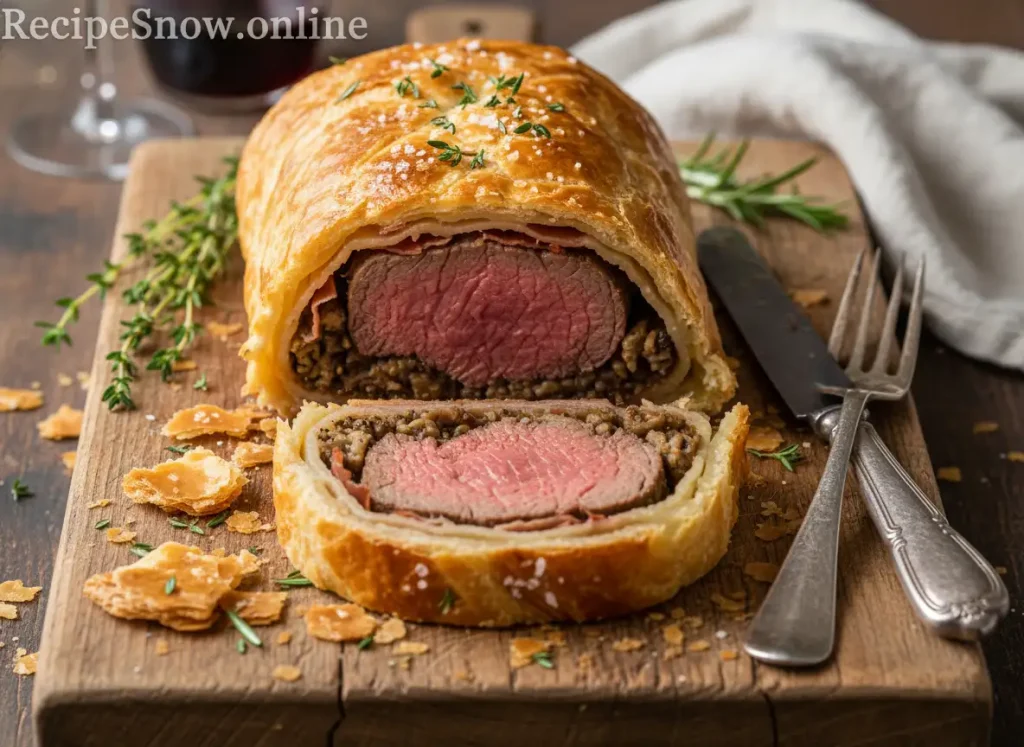
The Beef Wellington Recipe is a showpiece with a simple logic. A seared beef fillet meets an earthy mushroom duxelles, prosciutto for salt, and buttery puff pastry for crunch. The contrast of textures is the secret: a crisp exterior and a silky, medium-rare center. This method focuses on timing and temperature control. Expect a glossy, golden crust and a rich beef flavor wrapped in layered components. Read each step and prepare mise en place for calm, confident cooking.
Table of Contents
Ingredients for Beef Wellington Recipe
Use imperial or metric measurements. Choose quality ingredients for the best outcome; the recipe rewards freshness and proper technique.
- Center-cut beef tenderloin (filet) — 2 to 2.5 pounds, trimmed
- Coarse kosher salt — 1 1/2 teaspoons, plus more to taste
- Freshly ground black pepper — 1 teaspoon
- Olive oil — 2 tablespoons for searing
- Unsalted butter — 2 tablespoons
- Cremini or button mushrooms — 14 ounces, finely chopped
- Shallots — 2 small, minced
- Garlic — 2 cloves, minced
- Tarragon or thyme — 1 teaspoon chopped fresh (optional)
- Dry white wine or dry sherry — 1/4 cup (optional, for deglaze)
- Prosciutto slices — 8 to 10 thin slices
- Puff pastry — 1 package (thawed if frozen), enough to wrap the fillet
- Dijon mustard — 2 tablespoons
- Egg — 1, beaten with 1 tablespoon water for egg wash
- Flour — for dusting work surface
- Optional: pâté or foie gras paste — 2 tablespoons for richness
How to Make Beef Wellington Recipe
Work methodically. This recipe is mostly technique: sear, dry, assemble, chill, and bake. Each stage ensures structure and flavor.
Step 1
Trim the fillet and tie it loosely with butcher’s twine for even shape. Pat dry and season all over with salt and pepper. Dryness helps form a deep sear and keeps pastry crisp.
Step 2
Heat a heavy skillet over high heat. Add olive oil and butter. When hot, sear the fillet on all sides until deeply browned, about two to three minutes per side. Sear the ends briefly as well. Remove the fillet and let it cool. Brush lightly with Dijon mustard once slightly cooled for a subtle tang layer.
Step 3
Make mushroom duxelles: finely chop mushrooms or pulse in a food processor for even texture. In the same skillet, add a little oil, then sauté shallots until translucent. Add mushrooms and cook over medium-high heat. The goal is to evaporate moisture and concentrate flavor. Stir frequently, cook until mixture is dry and paste-like, about 10 to 12 minutes. Add garlic in the last minute. Optional: deglaze with white wine and cook until evaporated. Finish with chopped herbs and a pinch of salt. Cool completely.
Step 4
Lay out a large sheet of plastic wrap. Arrange prosciutto slices on the plastic in a slightly overlapping pattern to form a rectangle. Spread a thin layer of cooled duxelles over the prosciutto. If using pâté, spread a thin layer on the seared fillet before placing it on the prosciutto. Place the fillet in the center and use the plastic to roll the prosciutto around the beef, creating a tight log. Twist the ends of the plastic to compress the roll and chill for 15 to 20 minutes to set the shape.
Step 5
Roll out puff pastry on a lightly floured surface to a size that fully encloses the fillet. Remove plastic and place the prosciutto-wrapped fillet on the pastry. Brush pastry edges with egg wash. Fold pastry around the fillet, trimming excess so seams are neat. Press seams to seal and fold under for a tidy base. Crimp or score decorative lines on top, but avoid cutting vents that let juices escape. Chill assembled Wellington for at least 15 minutes to firm the pastry.
Step 6
Preheat oven to 425°F (220°C). Place the Wellington on a baking sheet lined with parchment. Brush the entire surface with egg wash for golden color. Optionally sprinkle a pinch of flaky sea salt. Bake for 20 minutes, then lower oven to 400°F (200°C) and continue for 10 to 20 more minutes depending on desired doneness: aim for an internal temperature of 120°F (49°C) for rare, 125°F (52°C) for medium-rare. Use an instant-read thermometer inserted into the center to check. Keep oven time flexible — pastry browns faster on some ovens.
Step 7
Remove Wellington when it is 5°F below desired doneness. Tent loosely with foil and rest for 10 to 15 minutes. Resting finishes carryover cooking and lets juices settle. Slice with a sharp knife in confident, single strokes to preserve the neat layers.
Chef trick
Dry the duxelles thoroughly before assembly. Moisture is the enemy of flaky pastry and causes soggy bottoms.
Chill between assembly steps. A cool, firm structure seals layers and prevents pastry distortion during baking.
Pro lTips for Beef Wellington Recipe
- Trim and tie the fillet for uniform roasting and consistent slices.
- Pulse mushrooms uniformly for even texture in the duxelles.
- Evaporate mushroom moisture completely; a drier filling protects pastry.
- Use prosciutto as a moisture barrier and for savory depth.
- Check temperature with an instant-read thermometer; visual cues mislead.
- Rest fully before slicing to keep juices where they belong.
Global Recipe Note — Beef Wellington Recipe
This Beef Wellington Recipe adapts to ingredient availability while retaining engagement. Swap prosciutto for a thin cured ham, or use local mushrooms to vary flavor. Maintain the technique: sear, dry, barrier layer, pastry wrap, chill, and precise bake. These steps preserve texture and create the layered experience that makes the dish special, no matter pantry differences.
Variations of Beef Wellington Recipe
Classic with pâté
Spread a thin layer of pâté or foie gras paste on the seared fillet for a lush, silky interior. The pâté melts into the meat and intensifies richness.
Vegetarian Wellington
Replace beef with a roasted portobello stack or a spiced lentil and nut loaf. Use mushroom duxelles as the main filling and wrap in pastry for a satisfying vegetarian centerpiece.
Herb and mustard crust
Mix Dijon, chopped herbs, and a touch of lemon zest. Brush under the pastry for a fragrant, zesty lift that cuts richness.
Individual Wellington parcels
Scale down to individual portions using beef medallions or large mushrooms. Bake slightly less time and monitor internal temps carefully for perfect doneness.
Pairing and Serving Suggestions for Beef Wellington Recipe
Serve slices with a glossy red wine jus or a simple Madeira reduction. Bright sides balance richness: buttered green beans, lightly dressed watercress, or roasted baby carrots. Creamy mashed potatoes or dauphinoise potatoes are classic starches that carry sauce well. For drinks, select a structured red wine or a rich, dark beer to match the beef’s depth.
Side Dishes Name
- Garlic and herb mashed potatoes
- Roasted baby carrots with honey and thyme
- Blanched green beans with toasted almonds
- Buttery duchess potatoes
- Simple watercress salad with lemon vinaigrette
Quick Nutrition Snapshot
Calories ~720 per generous slice (estimate)
Protein ~38 g per slice (estimate)
Carbohydrates ~40 g per slice (estimate)
Fat ~42 g per slice (estimate)
Values are approximate and vary with cut size, pastry thickness, and portioning.
Common Mistakes and How to Fix Them
Soggy pastry base
Fix: Ensure duxelles is dry. Chill the wrapped fillet before baking. Use prosciutto as a moisture barrier and bake on a preheated sheet.
Overcooked center
Fix: Remove Wellington 5°F below target temperature. Rest to allow carryover cooking. Use an instant-read thermometer for accuracy.
Puff pastry cracks or browns too quickly
Fix: Chill the assembled Wellington before baking. If browning too fast, tent loosely with foil and continue baking to finish internal cook.
Juices leak and pastry loses shape
Fix: Do not cut vents that leak juices. Instead, control interior moisture. A well-dried duxelles and chill stages prevent leaks.
FAQ About Beef Wellington Recipe
Can Beef Wellington Recipe be prepared ahead?
Yes. Assemble and refrigerate the wrapped Wellington up to 24 hours. Bring to room temperature before baking and adjust oven time slightly if cold.
How do I get a medium-rare center for Beef Wellington Recipe?
Sear the fillet well, wrap as instructed, and bake until an internal temperature of 125°F (52°C). Rest for 10 to 15 minutes to reach medium-rare.
Can I freeze Beef Wellington Recipe?
Yes. Freeze pre-baked, wrapped Wellingtons on a tray, then store airtight. Thaw overnight and bake until pastry is golden and internal temp is reached.
What is the best cut for Beef Wellington Recipe?
A center-cut beef tenderloin gives the ideal shape and tenderness. Trim excess fat for even searing and a neat pastry wrap.
How do I make the duxelles without a food processor?
Finely dice mushrooms by hand and sauté until moisture evaporates. It takes longer but yields excellent texture and flavor.
Summary
The Beef Wellington Recipe rewards careful pacing and precise technique. Focus on drying and cooling the duxelles, sealing layers with prosciutto, and controlling oven temperature. These actions produce a beautiful contrast: crisp pastry and tender, juicy beef in each bite.
Make this dish for a special occasion or to practice advanced technique. Slice confidently, offer a bright vegetable or simple salad to offset richness, and share the finished plate with guests. Try a variation next time and note which finishing touch you loved most. Please share how your Wellington turned out and which sides you paired for a memorable dinner.